We recently conducted some customer training on using the Cyclops for tube metal temperature measurements and found large temperature errors when using an old, damaged, and uncalibrated Cyclops C100.
When compared to the calibrated
Cyclops C100L, the error was minus 19 degrees Celsius, and minus 24 degrees Celsius to the calibrated Cyclops C390L. The uncalibrated unit was in regular use without
calibration for several years (it had been dropped and knocked over the years), and adjustments to firing were made partly based on the values, so the operator has not noticed the extent of the error. This meant that they were operating at higher-than-expected temperatures, near to the tube design limit in some cases.
 Image 1: data being collected using the uncalibrated Cyclops by colleague Prasath Venkatasamy
Figures 1-4 show the data for each
Cyclops on each tube per row. The raw values were measured at an emissivity of 1 and post-corrected using a background temperature of 1030 degrees Celsius and emissivity of 0.85 and 0.82 for the C100L (wavelength of 1 micron) and C390L (wavelength of 3.9 microns) respectively. The uncalibrated unit demonstrated both a larger error and decreased sensitivity, meaning that the error was higher when true tube temperature was higher.
 Figure 1: Corrected temperature for Row A
 Figure 2: Corrected temperature for Row B
 Figure 3: Corrected temperature for Row C
 Figure 4: Corrected temperature for Row D
These significant errors can be caused by several factors. As you can see from Image 2, these units take a heavy ‘bashing’ on peep doors, when being carried around, and they are occasionally dropped or left outside for extended periods. Mechanical damage can cause issues with some critical components, e.g., the main lens/protection window can partially separate from the focusing mechanism, which can cause internal dust and moisture contamination that filters incoming radiation.
Most uncalibrated
Cyclops will therefore develop errors that produce false low readings. Annual calibration is recommended to verify and certify the pyrometer. Our service centre technicians can strip the unit down, clean all surfaces, re-seal, repair, and recalibrate the unit to ensure that the errors are eliminated. In the GCC, where I am based, lead times were previously an issue due to logistics and customs delays, so we are proud to have opened our
in-house service centre in Dubai.
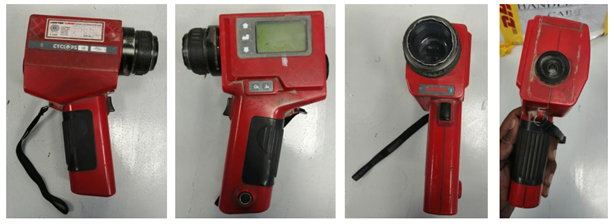
Image 2: Condition of a well-used
Cyclops returned to our calibration facility

Image 3: dust contamination of eye piece which would cause poor visibility and difficulty with targeting
For any questions relating to the temperature measurement in the hydrocarbon and petrochemical sectors, please feel free to contact me on
james.cross@ametek.com.